
Apps
Add, authorize and remove apps
Apps allow you to set up other tools to work with PagerDuty by sending data to PagerDuty or receiving data from PagerDuty. By directly integrating your existing tools, you can take advantage of PagerDuty's incident response capabilities and improve your workflows.
App DevelopmentApps are built by PagerDuty, partners, customers, system integrators, and the open source community. This article is a general overview of adding and managing public apps within your PagerDuty account.
Refer to the developer documentation to learn more about creating and publishing your own app.
Add Apps
Users with the appropriate permissions can add an app to their PagerDuty account following the installation instructions in the app's documentation. You can search for your desired integration's documentation by visiting the integrations library.
User PermissionsTo add an app directly to a service, you must have a user role with sufficient permissions to edit the service.
Authorize OAuth 2.0 Apps
When you authorize an app that uses OAuth 2.0, PagerDuty displays a prompt with the name of the app, your service region and user ID, and the permissions the app is requesting. Click Authorize to grant the app access.
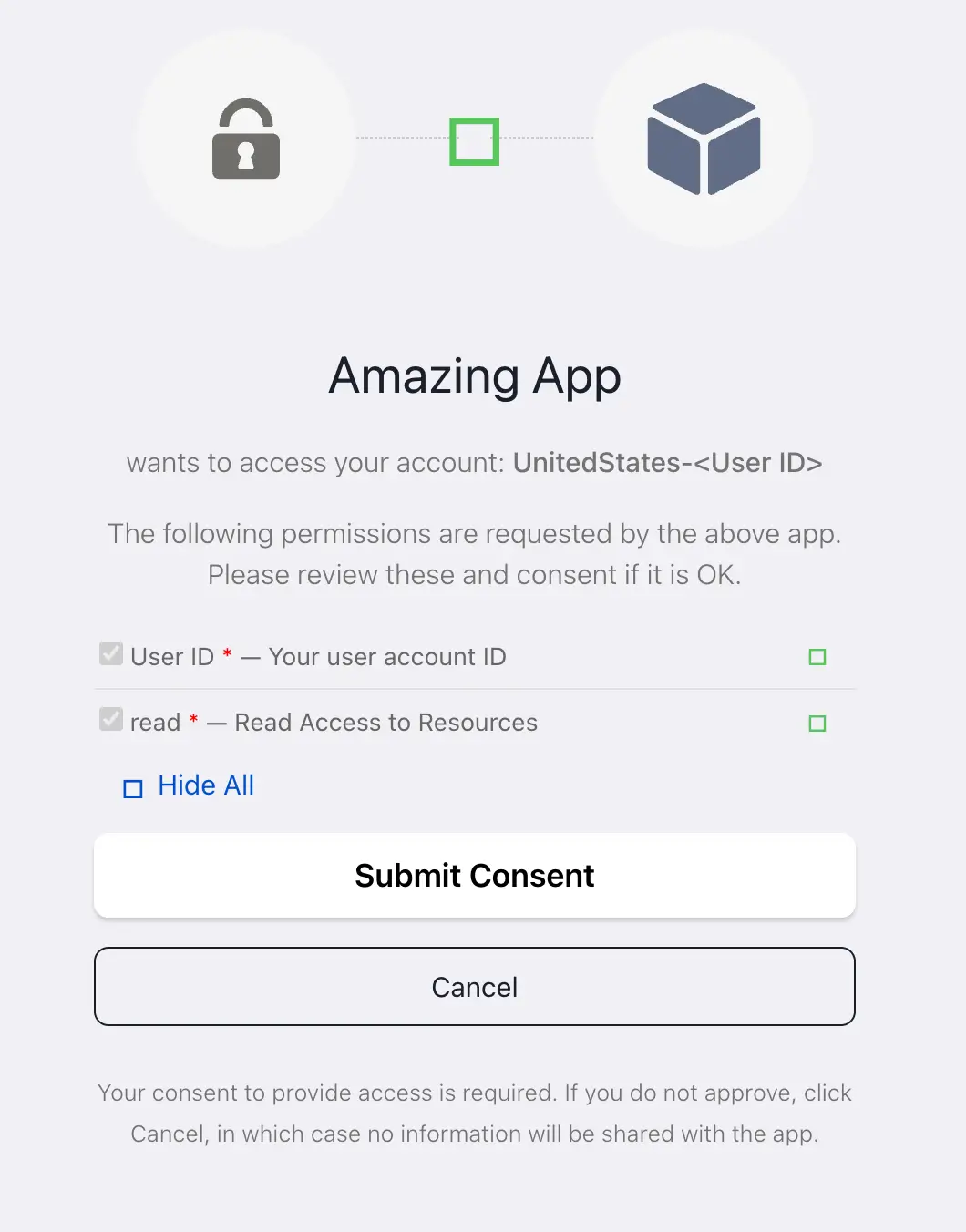
Authorize app access
Scoped OAuth AppsScoped OAuth apps use scopes to limit the resource types an app can access, and give Admins account-wide visibility into installed apps and the tokens they hold. A public Scoped OAuth app must be installed by an Admin before you can authorize it — if the app is not installed, the authorization prompt is unavailable to you.
Remove Apps
Removing an app from an account depends on how the app connects to PagerDuty. Refer to the app's documentation for specific instructions. General information about removing apps is in the following list:
- Events Integrations: Delete the integration from the service.
- Webhooks: Delete the extension from the service.
- Scoped OAuth Apps: An Admin can revoke tokens or uninstall the app from Integrations OAuth Apps. For more information, visit Scoped OAuth Apps.
Updated 28 days ago